Pattaya’s ripened truths
Observations from Pattaya, Thailand. Written and photographed by Angelica Ruzanova.
Consider the scene: a fully covered man, dressed from head to toe in protective sun gear, selling stretched out squid on a seaside wheelie well into the night. Behind him, a full blown gathering of kites held by the soft Pacific air - among which an inflatable squid, enormous to the former edibles, hovers its tentacles.
Unpredictability raises the people of Sattahip into a widespread state of nonchalance. A tropical storm lifts only a murmur among the chattering crowds seated about seafood, overlooking a long-forgotten sinking ship. Spicy food, ranked on a different scale of pain tolerance, tingles and bites back. And profanity, which blinks wildly in contrast to its Buddhist counterpart, is part of one as you stroll through the city.
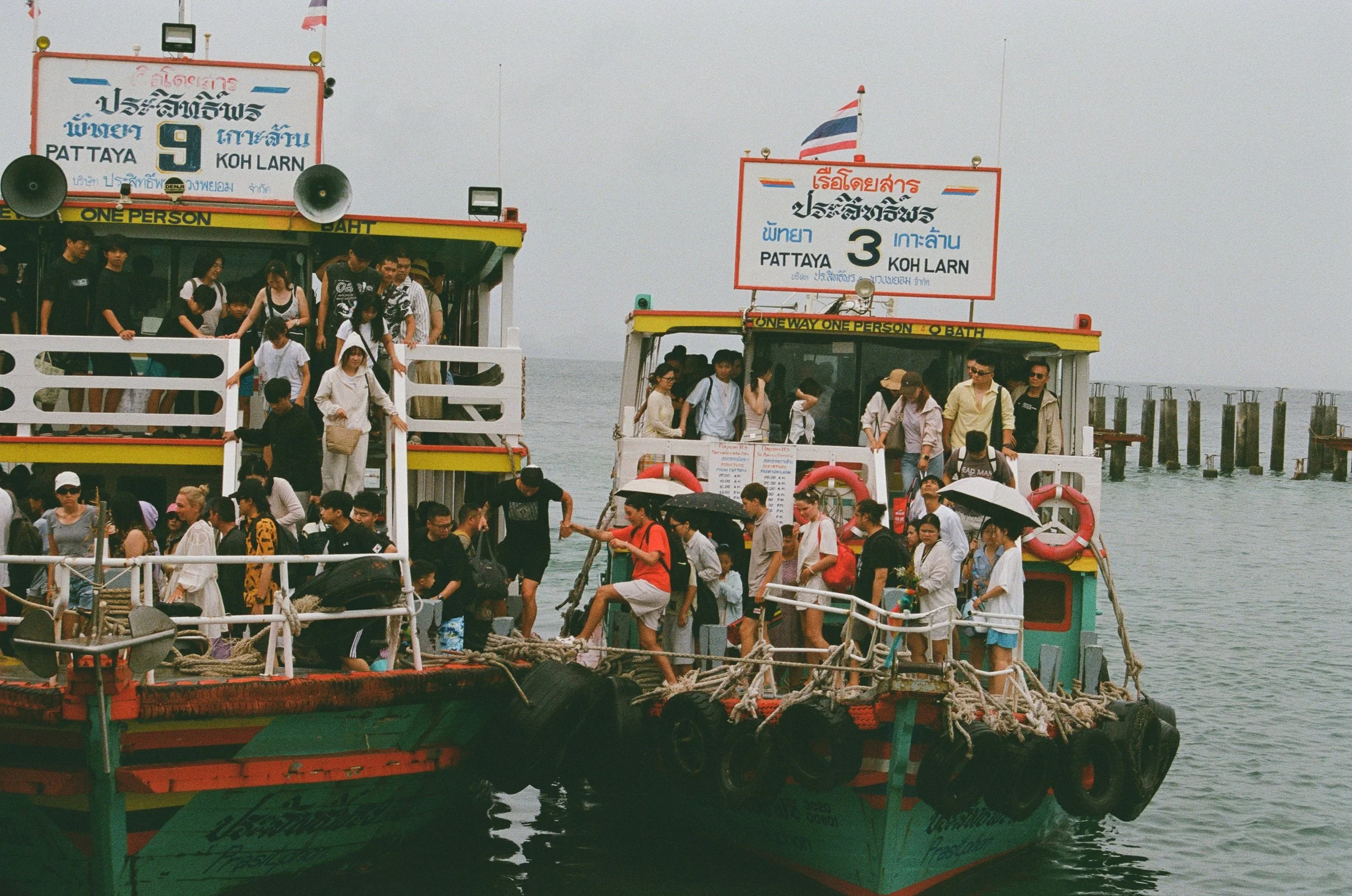
On a cloudy Tuesday we take a $1 boat to an island by the name of Ko Lan. The water there is clear, unlike the many smells that hit you upon arrival. Mollusks assemble layer upon layer on the pier steps, and beneath them are shallow waters with mushroom-shaped corals.
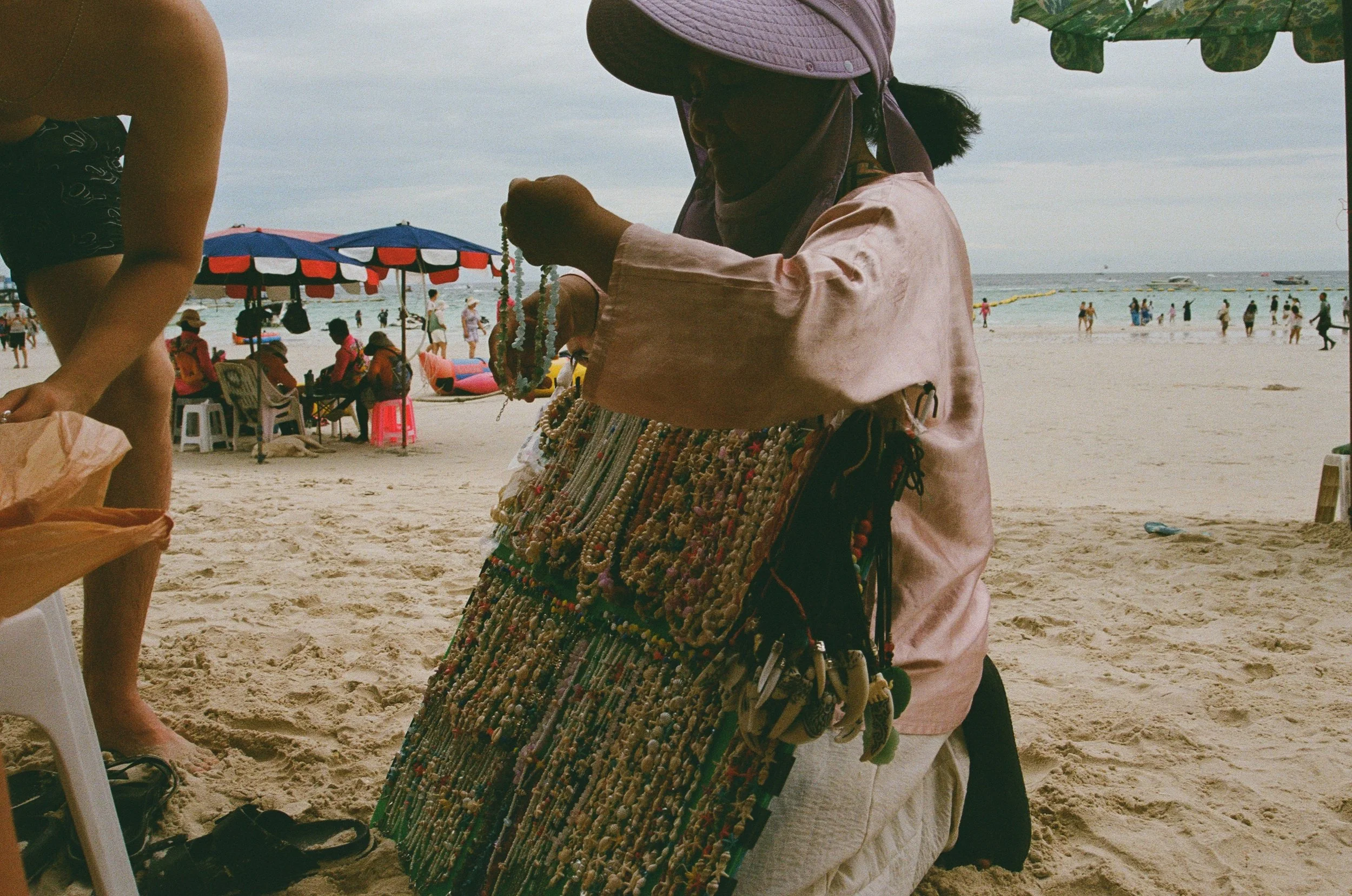
The merchants who cross long stretches of Jomtien beach are polyglots, speaking even Russian to attract bewildered customers.
This attitude, laid back with a phone or with a companion, can be found on a canvas beach bed, on the pavement squatting with a cigarette, or on a kilter rug akin to the leaves above it. Masseuses, whose work is integral to the city’s culture and economy, enliven the temporary bodies, bodies in search of balance between care and pleasure.
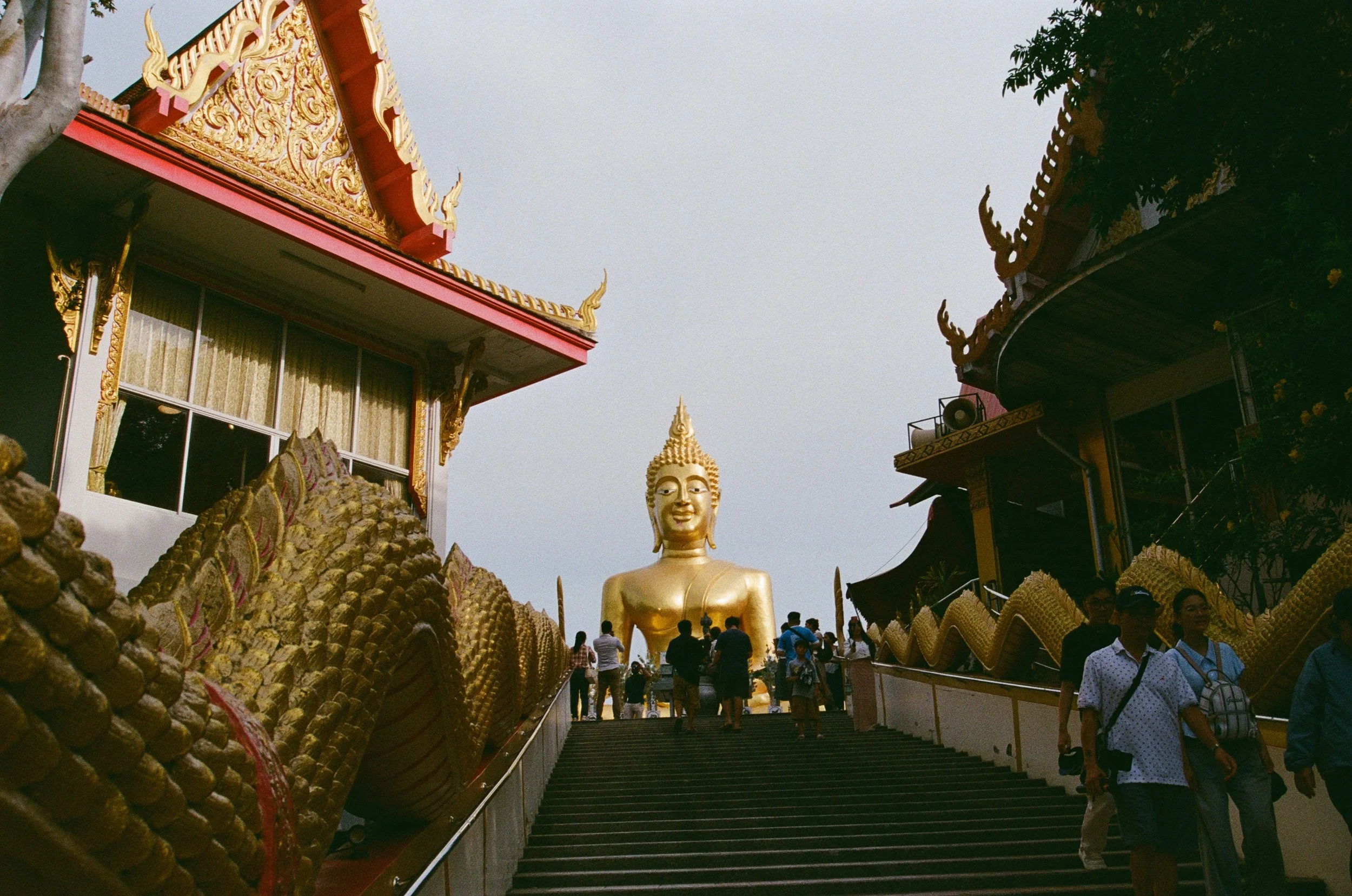
The various deities of Buddhist temples seem to have a serious case of sweet tooth. When we walk past their temples I notice the different offerings that inhabitants offer them: sugary soft drinks, bright red or green syrups, and milk, presumably to soften the acidity.
Up north where the city grows quieter, the collective soul habituates seven rooms in the Sanctuary of Truth. Those rooms are guided as follows (with a few added observations):
1. “Who are we, where are we from?” Creatures who once walked out of the South China Sea, creatures as large as elephants and as small as millipedes, crushing and getting crushed.
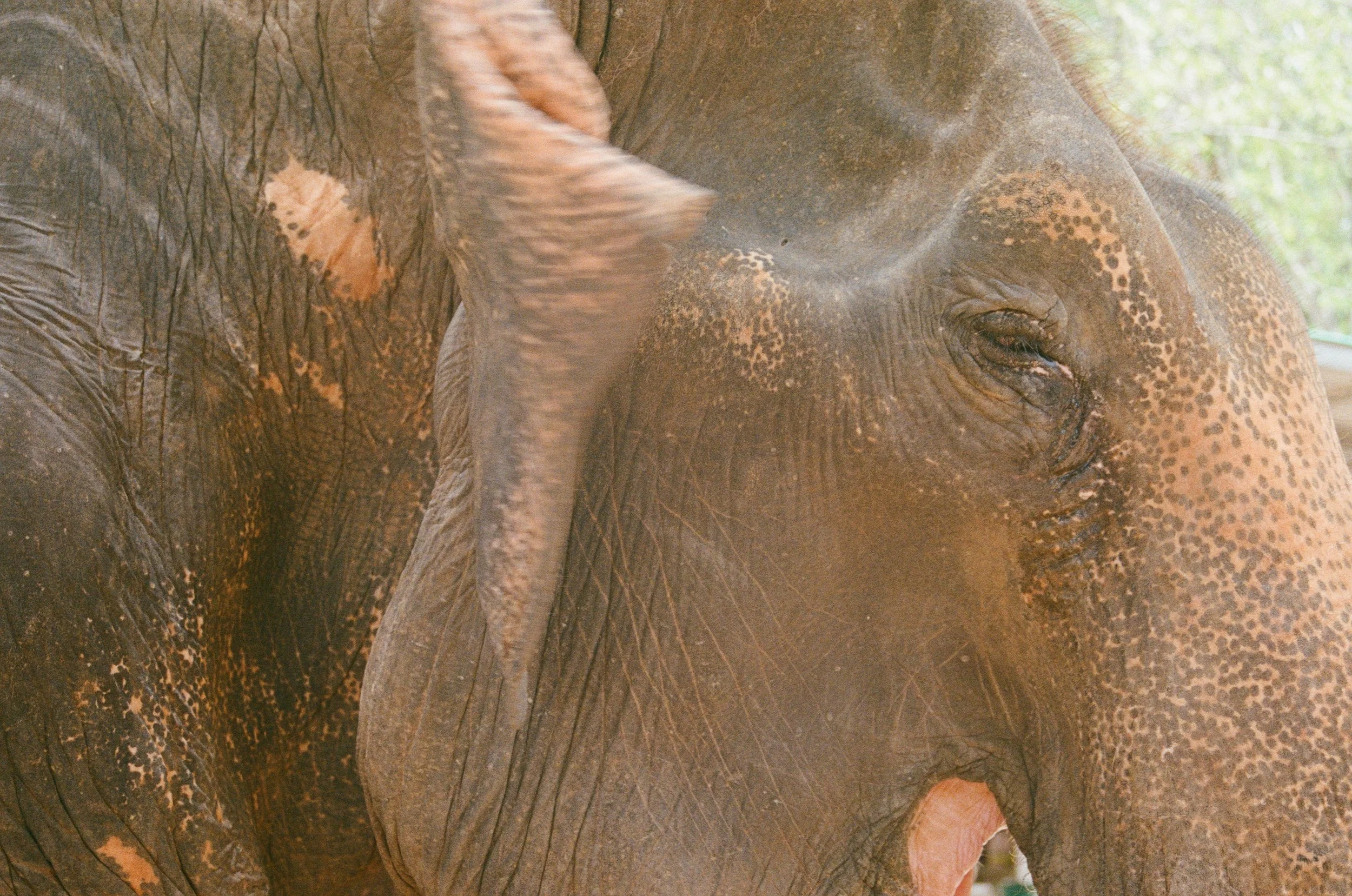
A 51-year-old elephant who, according to the Pattaya Elephant Sanctuary guide, was rescued from an abusive practice of “dragging” at the Cambodia-Thailand border.
2. “How do we live our lives?” It is the art of becoming that leaves many unsettled, maybe in vice massages deep in Bang Lamung district, maybe in its windowless saloons.
3. “The end of life.” We come with nothing and we leave with nothing, as our tour guide says. What stays is our impact, the footprints on the sand, the floating pieces of plastic on the shore.
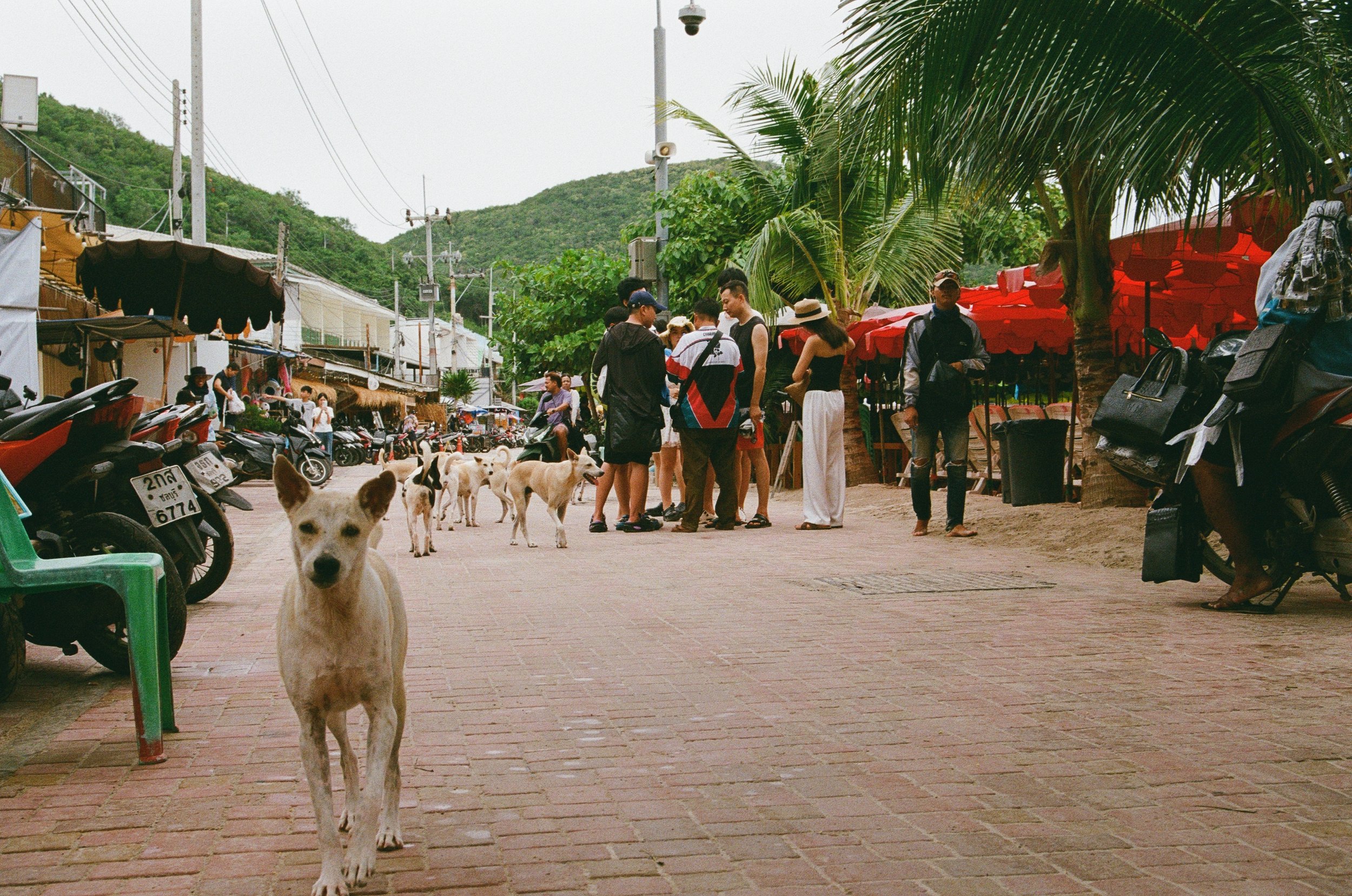
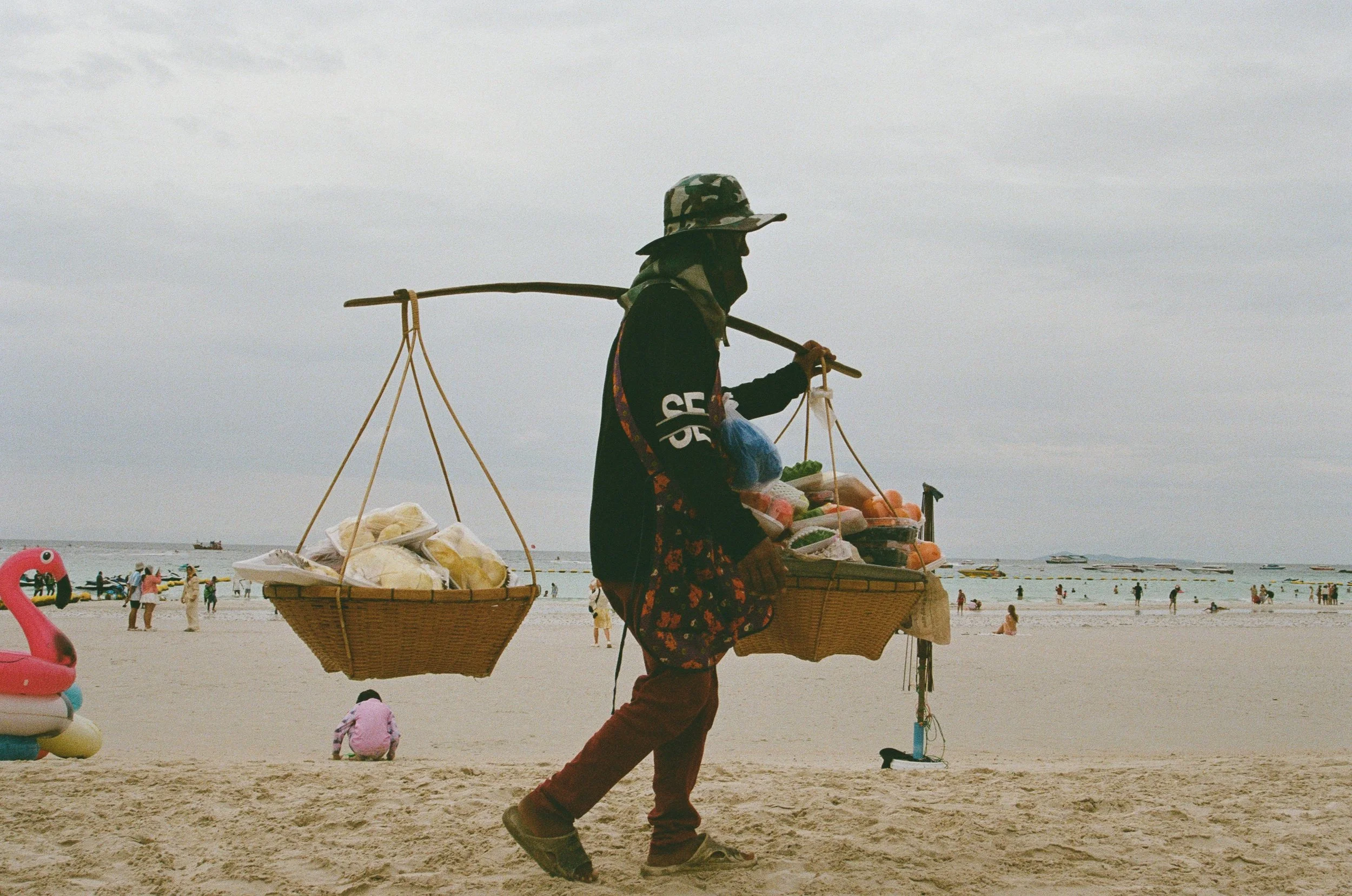
The color palette of this country is as cozy as a butterfly cocoon. It may be the consoling feeling of deep orange garlands, the tropical combination of blue and yellow fruit sold by the sea foam, or the occasional sweetness of pale pink stone that surrounds temples.
4. “Samples of civilization.” Scriptures from Taoism and Confucianism surround the hall. I feel them surface in monasteries that show Thailand’s own mixed civilization, from Hindu architecture to Sri Lankan law. I feel it retreat amid the static footage of a cockfight on TV.
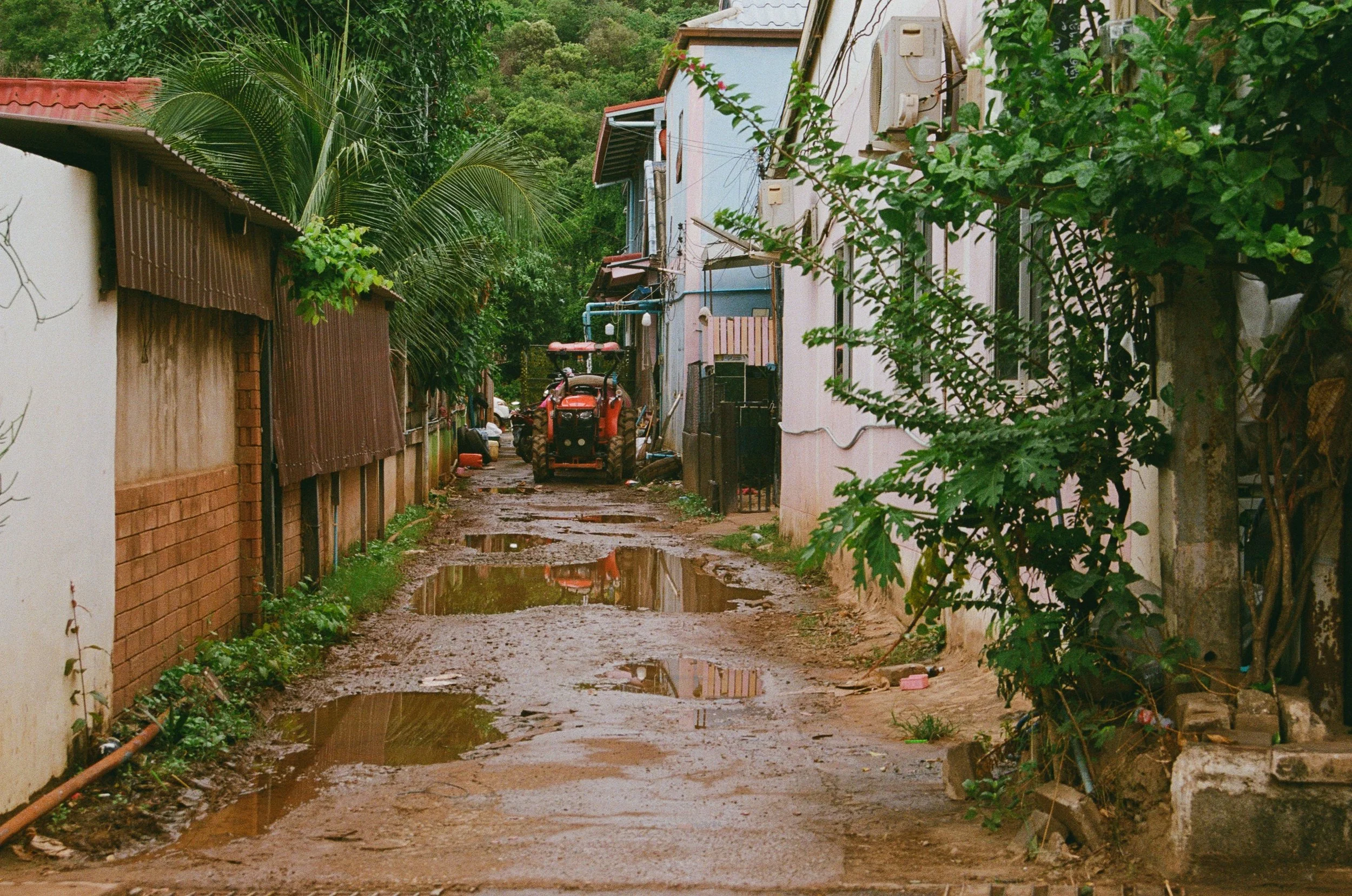
Ko Lan, akin to Pattaya, seeps in familiar aspects of developing life: small fruit truck vendors by the name of pla meuk ping, ongoing construction in the form of holes and hydraulic rigs, and random plastic chairs scattered about.
5. “What is a life goal?” To live life purposefully is simple but not effortless. The self is held to the highest pedestal, selfhood tangled in a larger whole, like electric wires unrecognizably buzzing at night.
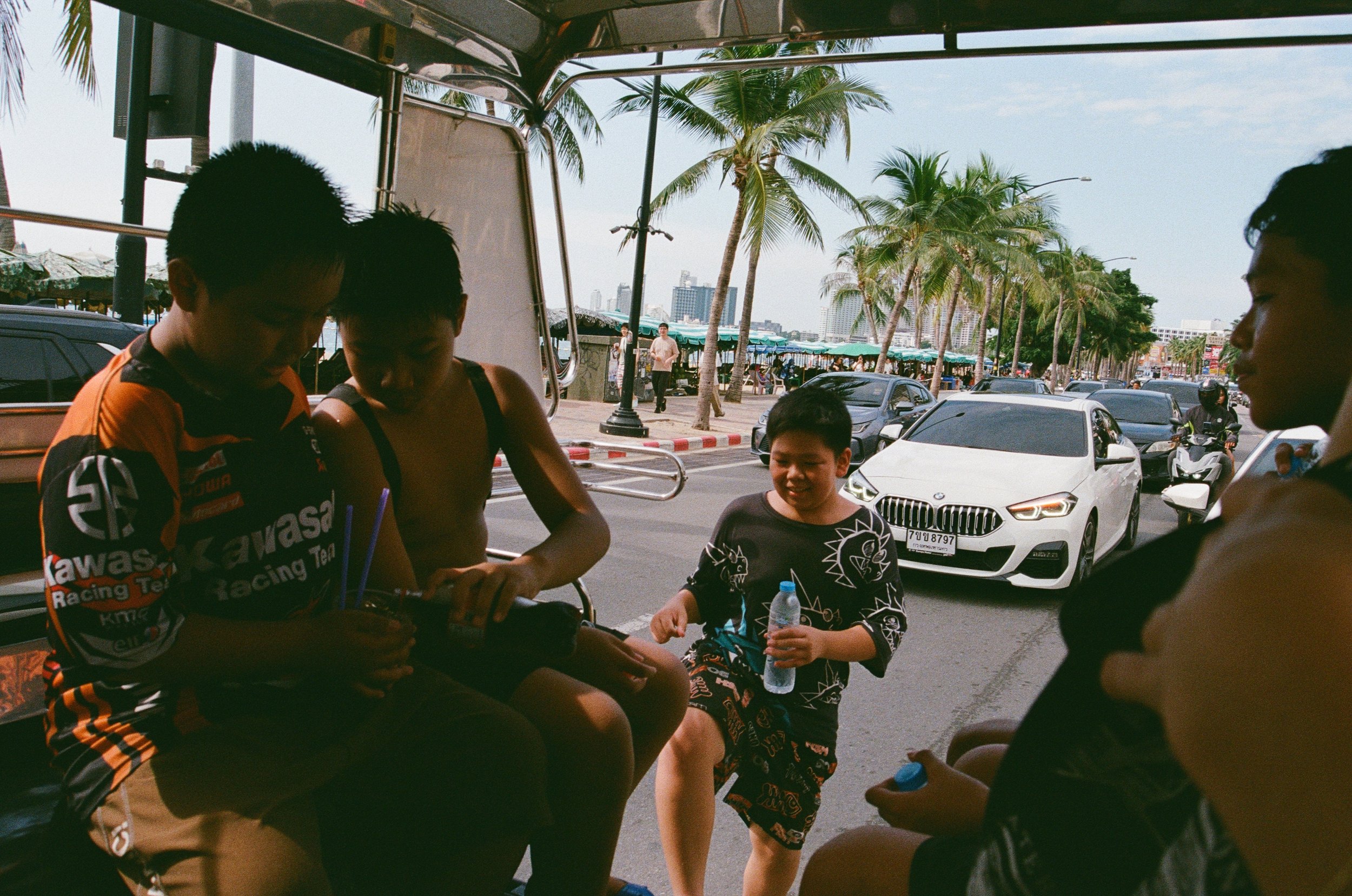
The Jomtien night market (the unofficial one) offers a glimpse of a blooming world. Mango and durian vendors feed visitors beside a Nang shadow performance, while people of all genders wear makeup to enjoy it. Public outdoors karaoke stops for no one, and for a moment it seems like night dominates day.
6. “Society is like a two-sided coin.” As with any state of being, one must loose something to gain something, like a fallen coconut that satiates with its freshness.
7. “The beginning of society.” Family is our first society, the guide affirms. And when we talk to another worker at the end of her shift who has recently lost her parents, she urges us to tell our loved ones about that love.
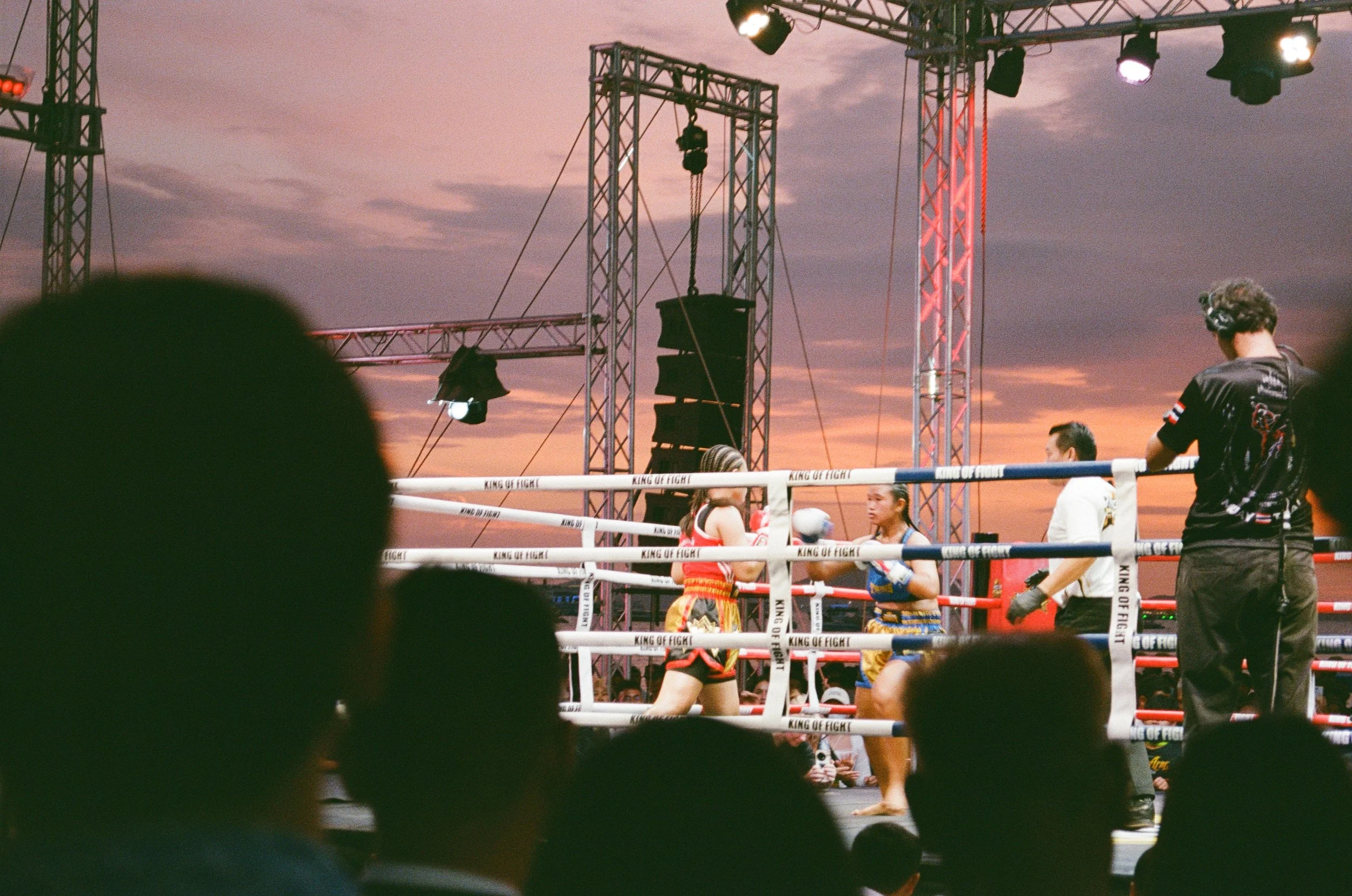
Each passing motorcycle creates a fully new traffic pattern, every Muay Thai boxing match a new ritual. And at one point, it becomes difficult to tell whether the boxers are fighting or hugging, or both.
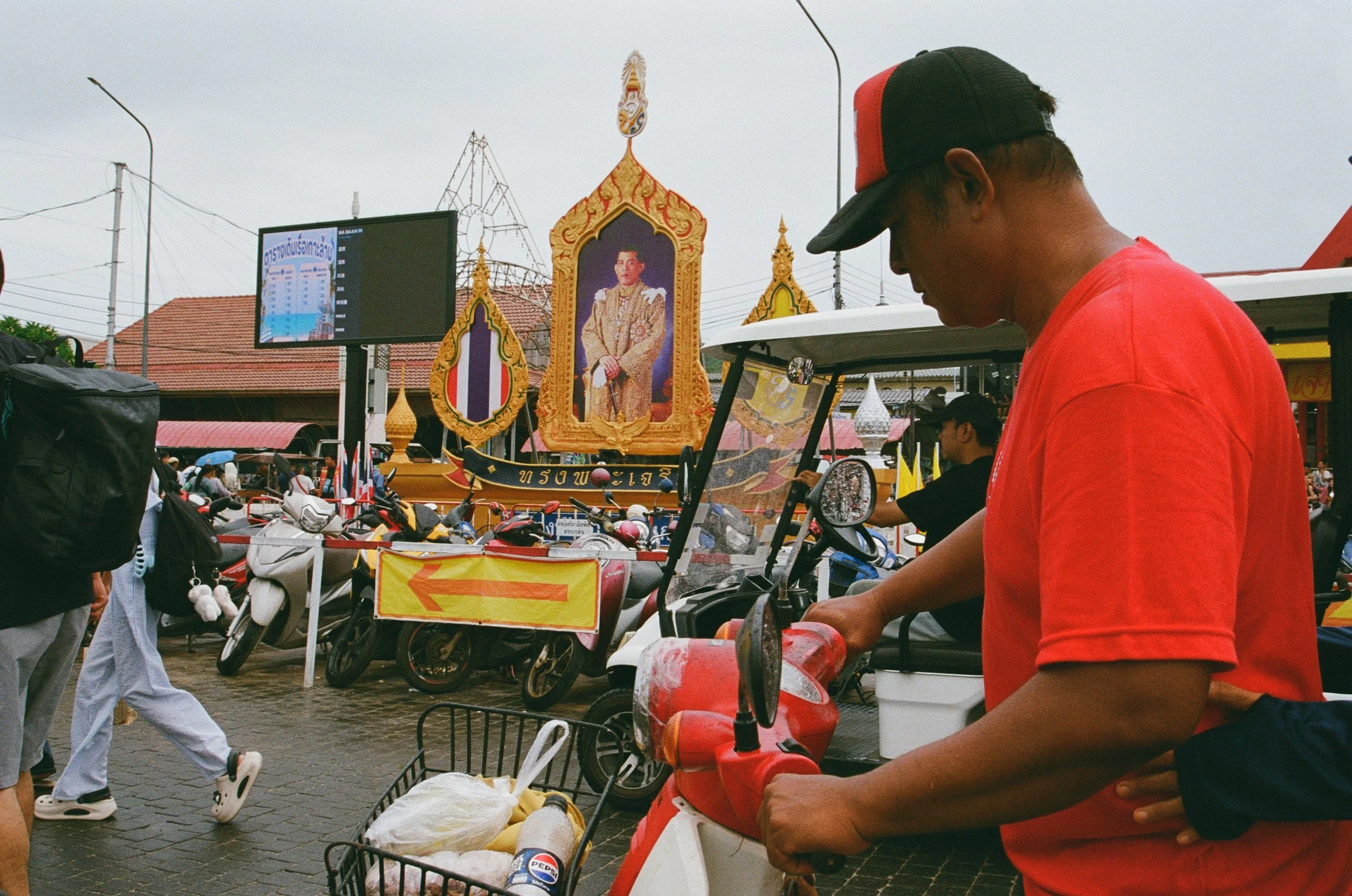
Ideograms of royalty - both alone and coupled - are hugged by golden rims at major entrances and highways. Spiked rooftops are reminiscent of pointed Chada hats, which seem as much an intimidation as they are an accessory.
Consider another scene: a lady on a motorcycle, blending in with the rest of the speeding crowd, wearing a polished office suit. Or a yet another one, in which a smiling monk, wrapped in orange cloth layers with exposed shoulders, observes a go-karting race on an overhead terrace. And then I realize that the former is more serious than the other.